Sponsored article
How Sheet Metal Edge Radius Affects Coating Durability and Corrosion Resistance
- Why Sharp Edges Weaken Protective Coatings
- How Edge Profile Influences Stress Distribution
- Edge Preparation for Carbon Steel, Stainless Steel, and Aluminium
- Defining Edge Radius Requirements in Technical Documentation
- Technologies for Consistent Edge Processing
- The Economic Impact of Edge Quality
- Key Takeaways
- FAQ
Sheet metal components often arrive at the painting department straight after laser or plasma cutting with sharp, untreated edges. During the initial visual inspection, the finished protective coating usually appears uniform, creating a misleading sense of security.
Read more: The Role of Surface Grinding Machines in Improving Metal Finish Quality
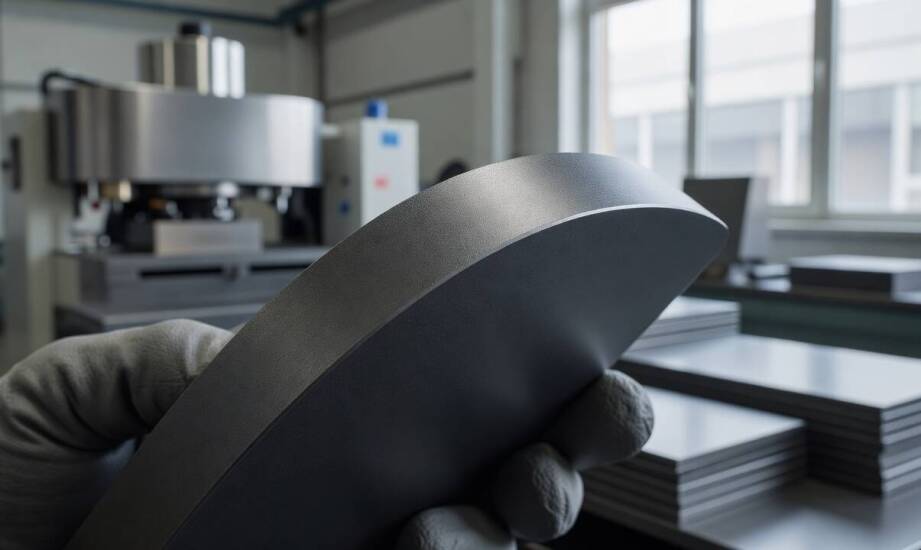
The issue often becomes visible only after several months of service in outdoor conditions or environments with elevated humidity. The first signs of corrosion typically appear along sharp edges, while flat surfaces remain unaffected. This difference is directly related to edge geometry, which influences how paint behaves during application and curing.
Why Sharp Edges Weaken Protective Coatings
Fluid dynamics plays a crucial role during the application of both powder and liquid coatings.
Surface tension causes uncured coating material to flow away from sharp edges toward flatter areas of the component. As a result, the coating thickness along the edges is significantly lower than the nominal thickness measured on flat surfaces. This phenomenon, often referred to as edge thinning, can substantially reduce barrier protection.
A thinner coating layer also provides less resistance to physical stress. Due to thermal expansion and contraction caused by changing temperatures, coatings on sharp edges tend to develop microcracks more quickly.
Once the protective barrier is compromised, moisture and oxygen can penetrate the coating. Corrosion often starts in these weak points and may then spread beneath the paint layer, eventually causing peeling and progressive degradation of the entire structure.
How Edge Profile Influences Stress Distribution
Modifying the geometry of an edge changes the way stress is transferred between the coating and the metal substrate.
Introducing a smooth transition helps maintain a more consistent coating thickness across the entire component geometry. Metallographic cross-section studies commonly show that an edge radius of approximately 0.5 mm can significantly reduce excessive paint run-off. The increased volume of coating material in this area helps absorb minor deformations more effectively.
A larger edge radius can also improve resistance to mechanical damage during handling, storage, and transportation.
Components are frequently subjected to impacts, abrasion, or contact with other parts. A sharp edge acts as a stress concentration point where even minor impacts may chip a coating. A radius of approximately 2 mm helps reduce the risk of coating damage by distributing impact forces across a larger area.
For applications requiring high corrosion resistance, ISO 12944-3 commonly recommends rounded edges as part of proper surface preparation prior to coating application.
Edge Preparation for Carbon Steel, Stainless Steel, and Aluminium
Different metals behave differently in aggressive environments, which affects the importance of edge preparation.
Carbon steel relies almost entirely on the integrity of the applied coating for corrosion protection. Even a microscopic exposure of bare metal may initiate rust formation. Sharp edges created by thermal cutting are therefore among the most vulnerable areas and often require edge breaking or edge rounding.
Stainless steel relies on a different mechanism. Its corrosion resistance comes from a passive chromium oxide layer, which may become less stable in surface imperfections, scale, or crevices.
Leaving rough cutting surfaces untreated can increase the risk of localised corrosion, particularly in chloride-rich environments.
Aluminium naturally forms a protective oxide layer. However, sharp aluminium edges can create separate challenges. When in contact with dissimilar metals, damaged insulating layers may increase the likelihood of galvanic corrosion under certain operating conditions.
Defining Edge Radius Requirements in Technical Documentation
Clearly specifying edge geometry in technical drawings helps eliminate misunderstandings during production.
Design engineers most commonly use the symbol "R" followed by a numerical value. In applications requiring verification and measurement control, the designation "CR" may be used to define a controlled edge radius subject to inspection.
Such specifications clearly communicate the required result to production personnel and quality-control teams.
The intended service environment should guide the final radius selection.
Components used indoors in low-humidity conditions may require only basic edge breaking, corresponding to a radius of approximately 0.5 mm. Applications exposed to coastal conditions, chemical vapours, or road salt usually require more demanding edge preparation standards.
In these environments, proper edge treatment often becomes an important factor in achieving long-term coating durability.
Technologies for Consistent Edge Processing
Creating a uniform profile along both external and internal sheet-metal contours is challenging in high-volume manufacturing.
Manual grinding rarely delivers the consistency required by modern engineering specifications and often increases labour costs. Automated processing systems address these limitations.
Modern production lines utilise stationary processing equipment equipped with rotating abrasive units. Consistent edge rounding of metal parts relies on controlled pressure from abrasive discs and brushes, allowing a repeatable radius to be achieved in a single pass.
Madora manufactures deburring and finishing machines that help stabilise this stage of production. Mechanical removal of oxide layers and controlled edge rounding prepare components for coating processes in line with common anticorrosion requirements.
The Economic Impact of Edge Quality
The geometry of a single edge can influence the overall economics of an engineering project.
Components with correctly rounded edges can reduce the number of coating defects caused by insufficient paint coverage. Fewer refinishing operations improve efficiency throughout the paint shop and help increase overall production throughput.
Careful preparation before coating can also reduce future maintenance and warranty-related costs.
Corrosion initiated at poorly prepared edges may eventually require costly repairs, replacement, or refurbishment in the field. Proper edge preparation helps reduce the risk of premature coating failure and supports long-term durability of finished products.
Key Takeaways
Sharp edges created during cutting can lead to thinner coatings and become the first locations where corrosion begins.
Larger edge radii help improve coating distribution and reduce the risk of microcracking during transport and assembly.
Carbon steel, stainless steel, and aluminium require different approaches to edge preparation.
In humid, outdoor, or salt-exposed environments, edge radius becomes increasingly important for coating durability.
Technical drawings should clearly define edge requirements using designations such as R or CR.
Automated edge-rounding systems help achieve consistent results in serial production.
FAQ
What edge radius is commonly considered suitable before coating?
For demanding corrosion-protection systems, a radius of approximately 2 mm is often recommended. Smaller radii may be sufficient in less aggressive environments, although they primarily remove sharp edges rather than fully address edge-thinning effects. Final requirements depend on the material, coating system, and service conditions.
Why do sharp edges corrode faster than flat surfaces?
Sharp edges often receive a thinner layer of coating because paint tends to flow away during application and curing. These thinner areas are more prone to cracking and provide less protection against moisture and oxygen. As a result, corrosion frequently begins at the edges even when the rest of the surface appears intact.
How should edge requirements be specified in technical drawings?
The clearest method is to define a radius using an "R" value. For controlled and measurable requirements, the "CR" designation may also be used. This provides clear manufacturing instructions and makes dimensional verification easier, especially for components intended for coating or use in corrosive environments.
Article categories
You might be interested

Daily Ministry Cassock – What Really Determines Comfort and Durability?
A cassock may look impeccable on a hanger, yet after several hours of active ministry it can become noticeably warm, heavy, and restrictive. Fabric may cling to the body in warm church interiors, while kneeling or climbing steps can place additional strain on the garment. In practice, an elegant app

English translation of intellectual property legal advice
Corporate law plays a key role in driving innovation and the development of technology start-ups. Adequate regulation enables entrepreneurs to focus on creating cutting-edge solutions. In addition, they support collaboration with others and the raising of finance, which is essential for success in a